
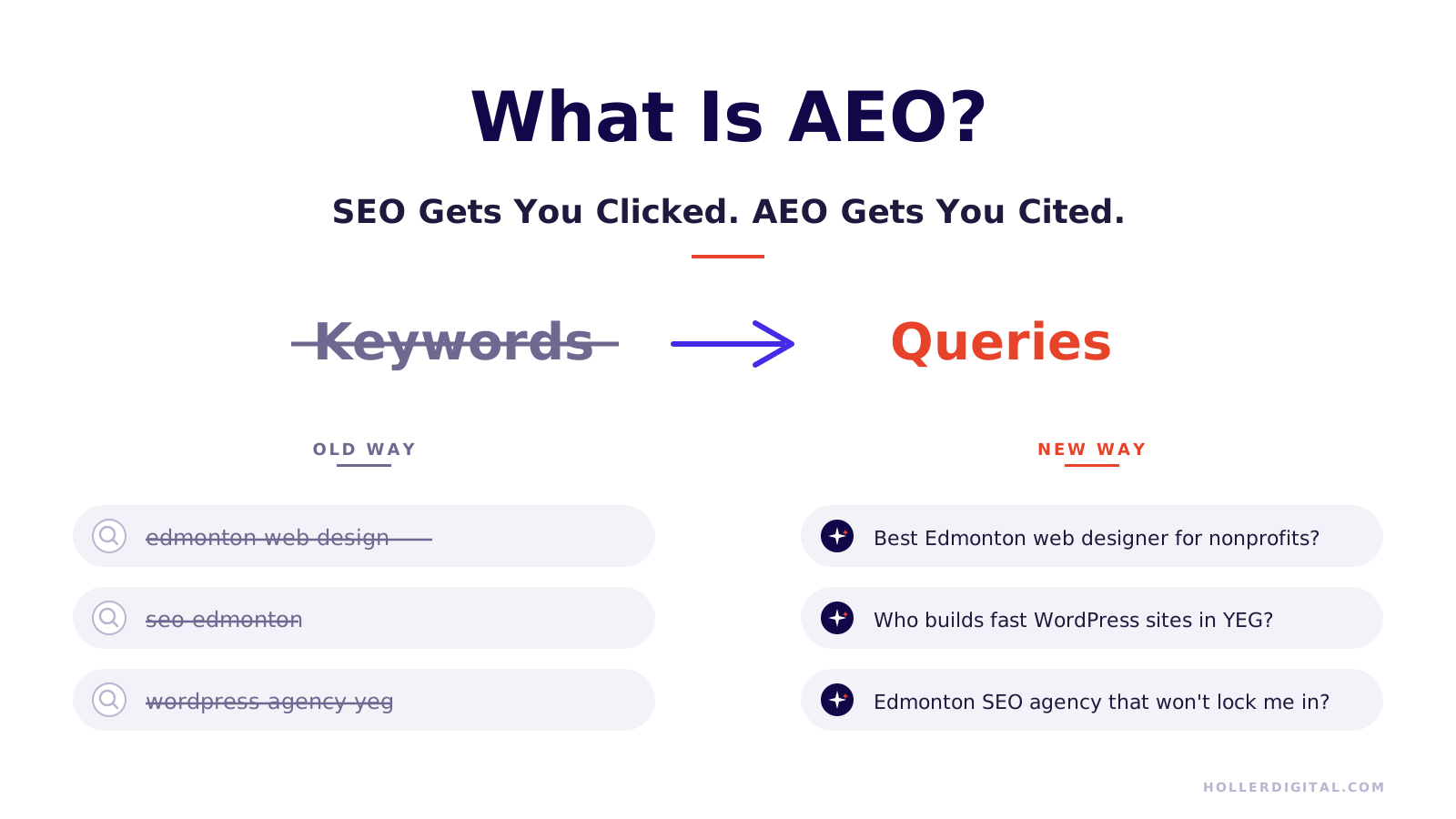
Think about how you actually searched for something last week.
Probably wasn’t “edmonton patio.” More like “best patio in yeg with a heated tent and decent wings.” Long. Specific. Conversational — the way you’d ask a mate, not a search bar.
That shift, from keywords to full queries, is the whole reason AEO exists.
Quick translation: AEO stands for Answer Engine Optimization. Your old SEO playbook gets you to the click. AEO gets you cited inside ChatGPT, Gemini, Perplexity, and the AI Overviews now sitting at the top of Google.
Same web. Different goal.
Agents Are the New Web Visitors
Here’s what’s changed under the hood. When someone asks an AI a question, an agent goes out, fetches a handful of pages, pulls out the bits it can use, and assembles a recommendation.
The visitor isn’t a person scrolling your homepage anymore. It’s an LLM skim-reading you in seconds.
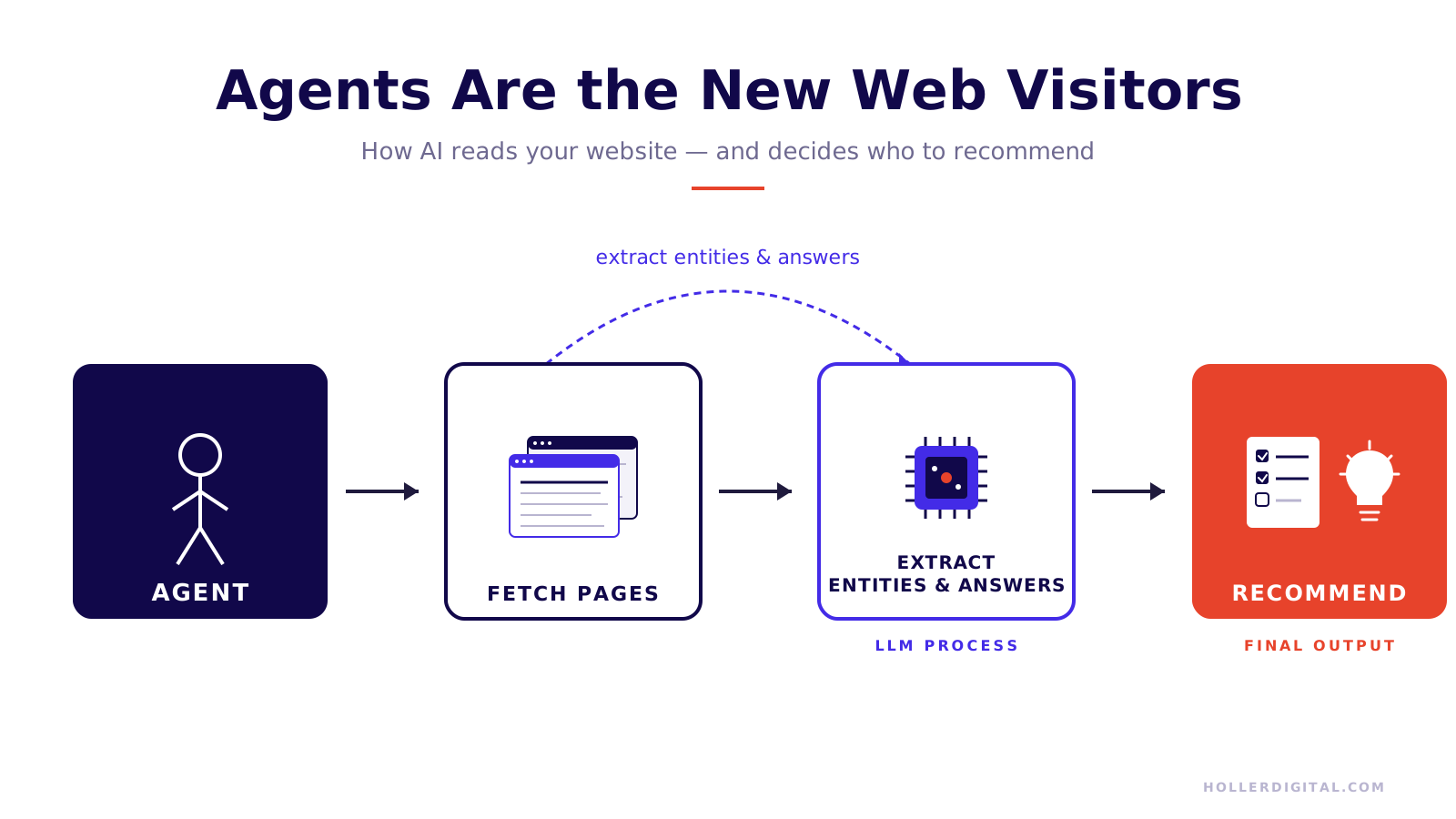
If your content isn’t structured for that kind of skim — clean answers, clear entities, proper schema — the agent moves on. No click. No citation. No mention.
Yeah. Brutal.
Different Game, Different Rules
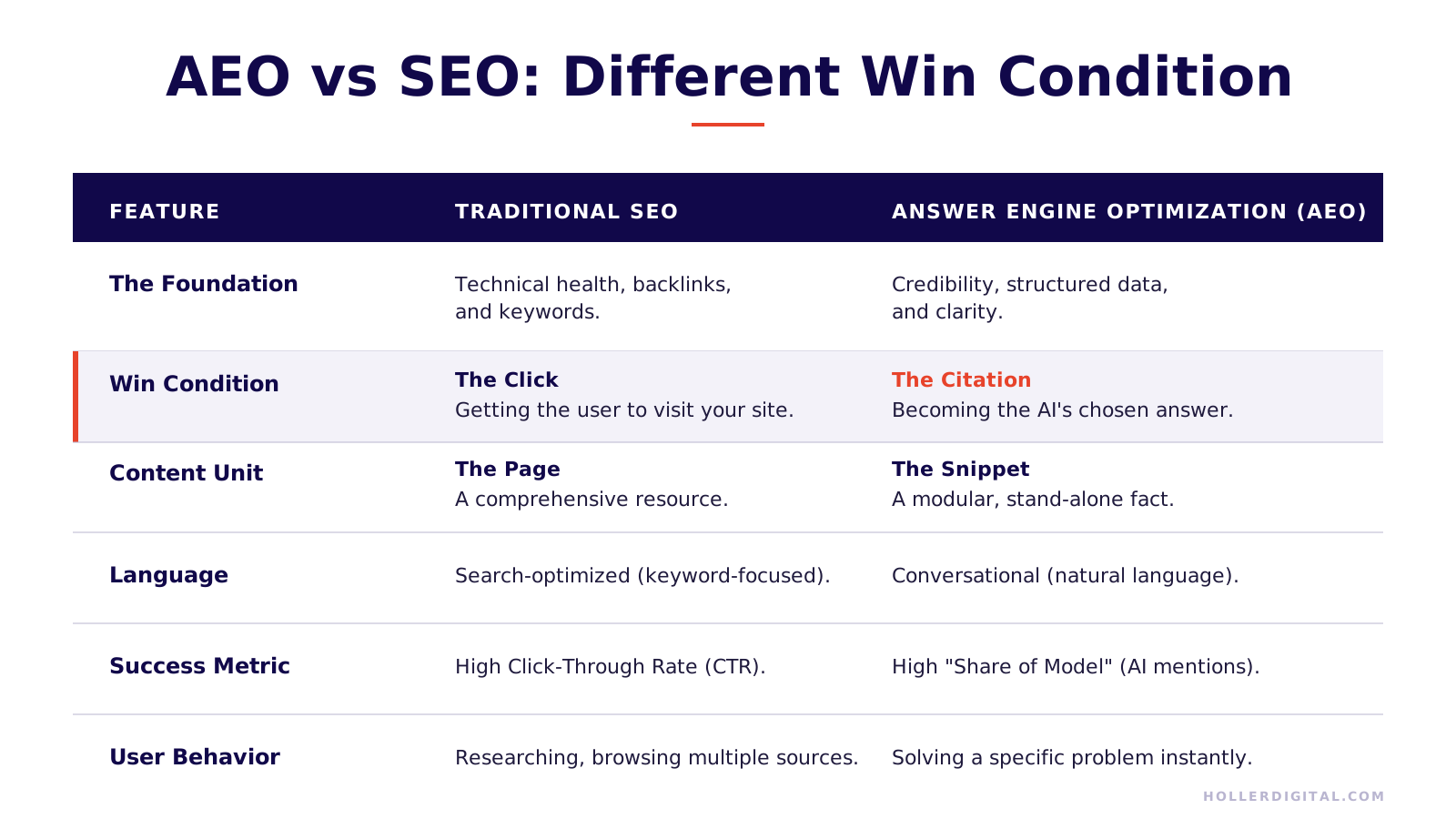
The row I’d pin to your monitor: win condition. SEO wins when someone clicks through. AEO wins when an AI picks you as the source.
That’s the whole shift.
You’re not trying to seduce a human into your site anymore — you’re trying to be the most quotable, structured, trustworthy paragraph the LLM finds on the topic.
Translation: be the answer, not the article.
Make FAQs Do The Heavy Lifting
If AEO had a love language, it’d be FAQs.
The format mirrors exactly how people prompt an AI. Question in, answer out. No fluff between.
Real FAQs — not the lazy “What is web design?” kind — are the closest thing you’ve got to a direct line into an LLM’s recommendation engine.
What “real” looks like:
- Pulled from actual questions clients ask in discovery
- Plain-English answer in the first sentence (the bit the agent grabs)
- Two or three lines of context after for the human
- Wrapped in proper FAQ schema so agents know exactly what they’re looking at
One good FAQ section can punch above its weight more than another 800-word blog post. Yeah, really.
Internal Links Are Your Entity Graph
Here’s the part most “AEO checklists” skip entirely.
When an agent fetches your page, it doesn’t read it in isolation. It follows your internal links to work out what else you do, how it all connects, and whether you’re an authority on the topic — or a one-page wonder pretending to be one.
Translation: your internal linking is the entity graph for your site. It’s how the LLM joins the dots.
Two moves that matter:
Descriptive, intent-matching anchor text. Edmonton SEO services beats “click here” by a country mile. Geo-qualifying gives the agent two signals at once — what you do, and where.
Hub and spokes, both directions. Your service page should link to your portfolio, process, and pricing. Each of those should link back. Build a web, not a list.
Think of it like a busy restaurant kitchen — every station knows where every other station is. No “where do we keep the spoons?” energy.
Plus the basics: lead with the answer, write conversational H2s, and get your schema right.
The Honest Bit
SEO isn’t dead. Don’t let anyone on LinkedIn tell you it is.
Clicks still pay the bills today. Citations build the trust that pays them tomorrow. You need both — and most Edmonton businesses haven’t tuned for the AEO half yet. That’s the window.
Want a Sanity Check?
Send me your URL and I’ll tell you straight whether your site is set up to be cited, not just clicked → get in touch

Written by