
Eight projects. Every number sourced.
Most agency portfolios prove the work happened, not that it worked — a wall of thumbnails and a project name. So this page leads with the outcome, names where each figure came from, and says plainly when there isn’t a number to show.
Outcome-first cards
Source named per figure
Gaps disclosed
Filter by sector
Also worked with
- Government of Alberta
- MacEwan University
- Canadian Western Bank
- AutoCanada
Listed without outcome claims — those engagements’ figures aren’t ours to publish.
Proof, not promises
Pick the one that looks like your situation.
8 projects · filter to shortlist

- SEO
- AI visibility
- Specialty retail
Six core terms to #1 in nine months.
WC Marker · Alberta
Products people search for by brand, model and country — the kind of query that used to be won purely on rankings. Over the same nine months their referrals from AI answer engines went up four-fold, which is the number that actually mattered: the work that earned the rankings also made them the source the machines quote.
6×
Core terms at position #1
4×
AI answer-engine referrals
9mo
Engagement to result
Rankings: Google Search Console · Referrals: GA4

- SEO
- AI visibility
- Equipment finance
From page two to #1 in four provinces.
Essex Lease · Calgary & Edmonton
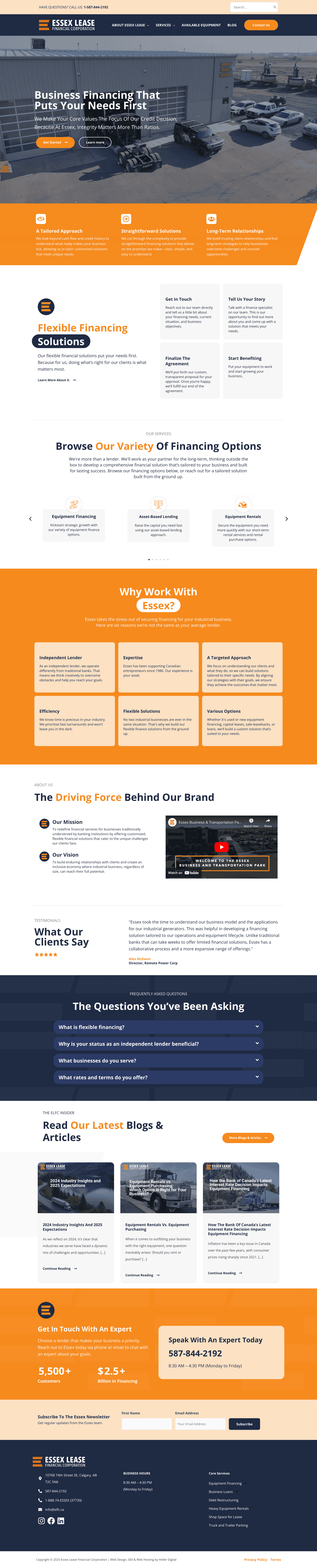
Financing Canadian businesses since 1986, and sitting at an average Google position of 24 — deep on page two, where commercial intent goes to die. Six months of restructured keyword strategy, continuous technical and content work, local presence for both offices, and AI search treated as a channel rather than an afterthought.
+269%
Growth in search impressions, to 1.46 million, from Google Search Console
Six months, against the six before it
- Rebuild
- CRM
- Equipment finance
164% more organic click-through in year one.
Essex Lease · Alberta
A considered purchase, where the site has to do real explaining before anyone picks up the phone. Discovery concluded rebuild rather than repair: a streamlined user journey, a content structure that could actually describe what they offer, and CRM integration so enquiries stopped being re-keyed by hand.
+164%
Organic click-through lift in year one, from Google Search Console
One figure, because it’s the one we can source
- Custom build
- Hosting at scale
- Fundraising
11,083 visitors in a single day, no downtime.
Lemonade Stand Day · Stollery Children’s Hospital
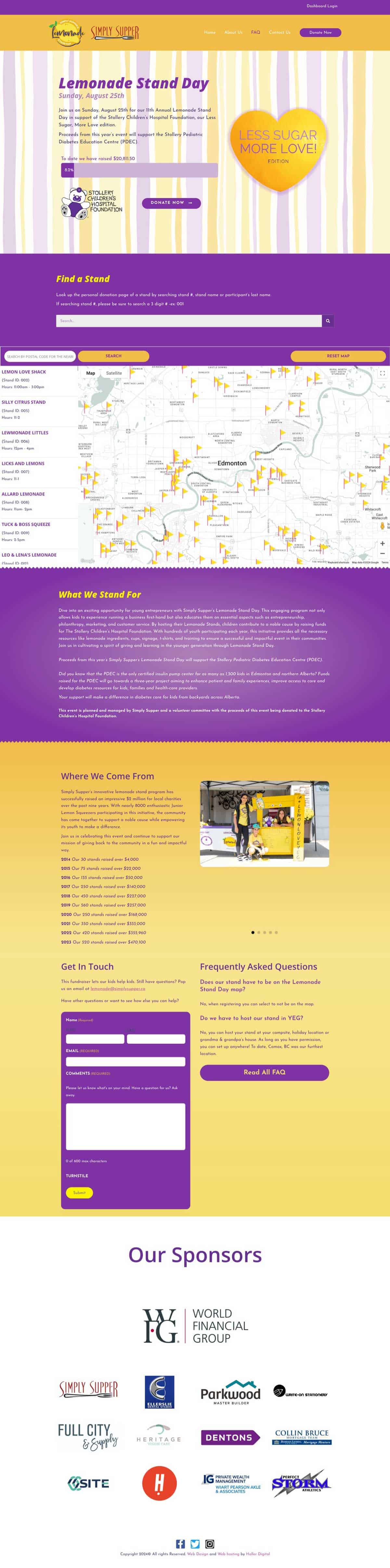
A city-wide fundraiser — hundreds of kids, one website, and a whole city arriving at once. Event day brought a five-fold surge against the daily average with donations flowing through it the entire time. This is the one day a year when the monitoring and the boring weekly maintenance justify themselves.
11,083
Visitors on event day
5×
Normal daily traffic
100%
Uptime through the surge
Traffic: GA4 · Uptime: monitoring log
- Redesign
- Fitness
A simpler path from curious to booked.
Breathe Fitness · Edmonton
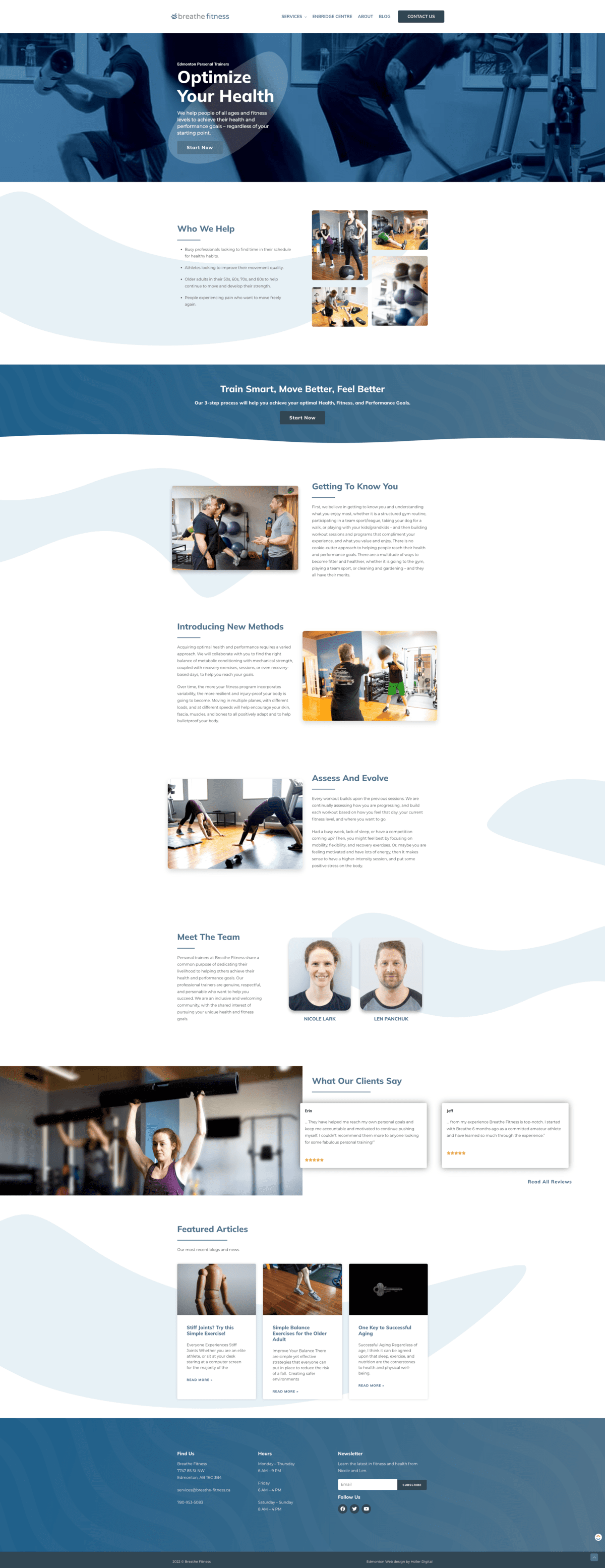
People at very different fitness levels arriving with the same question — is this place for someone like me? The redesign simplified that journey rather than adding to it, cutting the route from landing to enquiry down to something a nervous first-timer would actually finish.
No performance figures published for this engagement. We’d rather show a card with an honest gap than fill it with a number we can’t attribute — which is the same standard we’d ask you to hold every other agency to.
- Rebuild
- E-commerce
- Meal prep
A checkout built for how the food actually sells.
Simply Supper · Edmonton
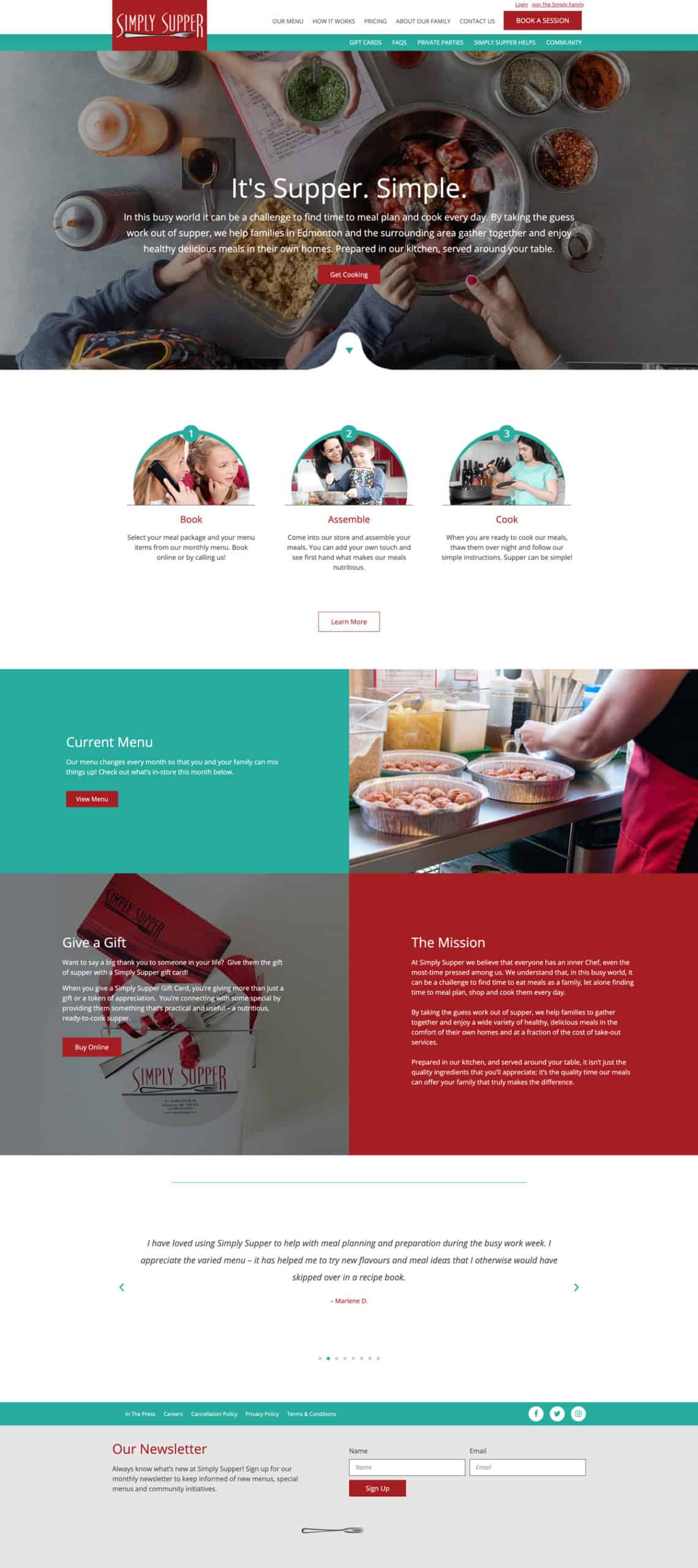
Meal prep does not shop like an ordinary store, and no off-the-shelf cart could describe what they sell. A multi-step checkout built from native and custom WordPress, and weekly transaction reporting inside the dashboard the team already uses.
No published figures for this engagement
- Rebuild
- SEO
- Interior design
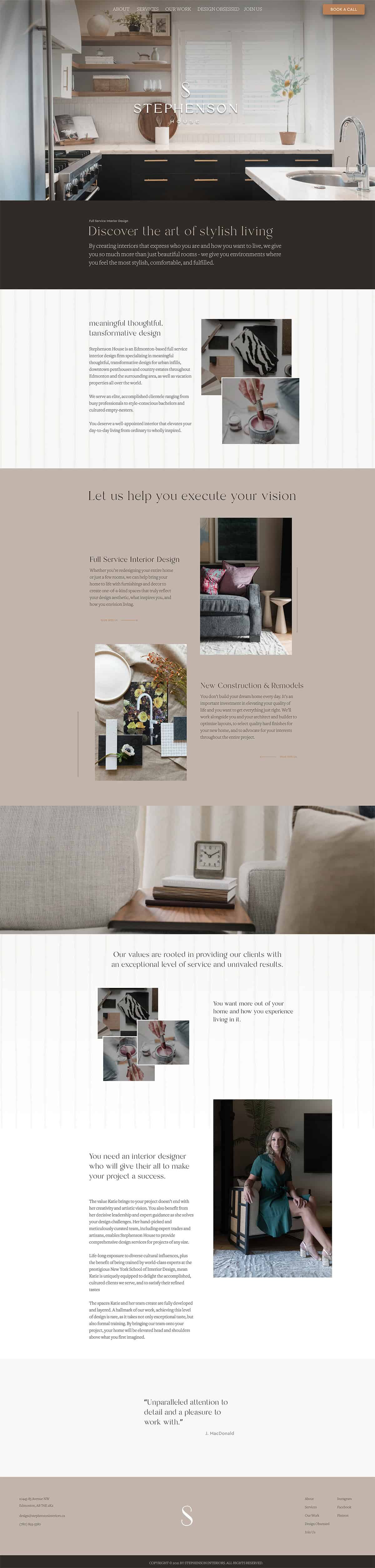
From 16th to 4th for “edmonton interior designers”.
Stephenson House · Edmonton & Vancouver
A rebrand the website had not moved with, in a category where people look for a long time before they enquire. New brand carried properly, navigation simplified, conversion tracking where there had been none, and a Shopify store added in a second phase.
16 → 4
Position for “edmonton interior designers”, shortly after launch
Reported at launch, 2021 · predates our rank tracking
- Rebuild
- CRM
- Politics
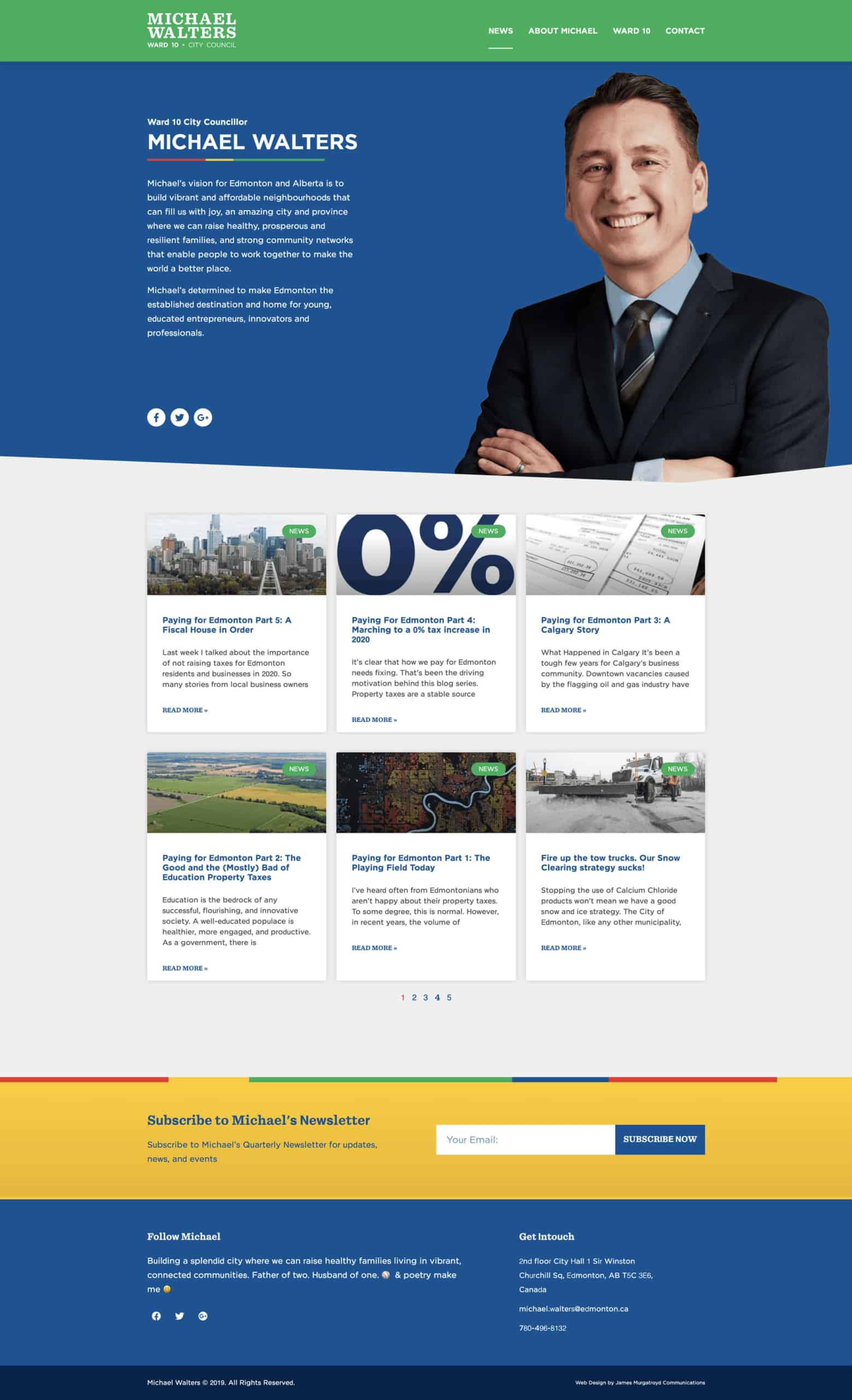
A site his own team could actually update.
Michael Walters · Edmonton City Council
A sitting councillor whose website had been built on the campaign platform, and whose office could barely edit it. Moved onto WordPress his team could run between meetings, with a typographic design built for long policy writing and Campaign Monitor wired in.
No published figures for this engagement
show all work
The part nobody publishes
Eight projects is not twenty years of work.
Twenty years and 280-plus organizations produced a great deal more than four case studies. What’s on this page is the subset where the numbers are ours to publish, verifiable, and actually attributable to the work rather than to a coincidence.
The rest fall into three piles: engagements under NDA, engagements where the client’s own reporting can’t isolate our contribution, and honestly, the ones that didn’t move enough to be worth writing up. Every agency has that third pile. Very few mention it.
For context on the selection above: roughly three engagements in ten conclude that a rebuild is the right answer at all — the other seven get optimization work, which produces less quotable case studies and considerably smaller invoices.
a portfolio is a highlight reel — read it that way
Typical agency portfolio
- Card headlineproject name
- Outcome visible before clickno
- Figures attributedrarely
- Projects without resultsomitted
- Selection bias disclosedno
- Proveswork happened
Screenshotsand a client list
This page
- Card headlinethe outcome
- Outcome visible before clickyes
- Figures attributedper figure
- Projects without resultsshown anyway
- Selection bias disclosedthis section
- Proveswork worked
4 of 4sourced or disclosed
Use this on everyone
How to read any agency’s case study.
Five tests that separate a real result from a well-designed claim. Run them on this page too — if any card here fails one, that’s a fair thing to raise on the call.
01 Is the number attributed to a source you could check?
The single fastest tell “Traffic up 300%” with no source is decoration. Real reporting names the tool and the window — Search Console, GA4, a rank tracker, a specific date range. An unsourced percentage is not evidence, it’s typography. If a case study has five impressive figures and no named source for any of them, treat the whole page as marketing copy.
02 Percentage or absolute — and why did they choose that one?
Percentages hide small starting points Going from 4 enquiries a month to 12 is “+200%”, which is real but reads far bigger than it is. Absolute numbers hide the opposite problem. Honest reporting gives you both, or gives you the one that’s less flattering. When you see only a percentage, ask what the starting number was — the answer is often the actual story.
03 Could something other than the agency have caused it?
Correlation gets sold as causation constantly A seasonal peak, a competitor going under, a funding announcement, a Google update, or the client’s own PR campaign. Any of these can move numbers during an engagement. Ask what else was happening in that window — a provider who has thought honestly about attribution will have a considered answer; one who hasn’t will look surprised by the question.
04 Does the metric connect to money or mission?
Impressions are the classic decoy Impressions, sessions and keyword counts are easy to grow and often mean nothing. Enquiries, donations, registrations, qualified leads — those are harder to move and harder to fake. If the headline figure is a vanity metric, assume the meaningful ones didn’t move, because they’d have led with those instead.
05 Where are the projects that didn’t work?
The one nobody expects you to ask Every portfolio is a highlight reel — that’s legitimate. What’s telling is whether the provider will discuss the other pile when asked directly. Ask for an engagement that underperformed and what they learned. A straight answer is the strongest signal available to you; a deflection tells you how the conversation will go when your own project hits a difficult month.
How to use this: run all five on every shortlisted provider, this one included. A case study that passes 01 and 04 is worth taking seriously. One that fails both is a design exercise. And 05 is worth asking out loud on the call — the reaction tells you more than the answer.
Comparing several agencies
Take this list with you. It’s more useful applied to our competitors than to us, and we’d still rather you used it than didn’t.
Next step
Does one of these
look like you?
Tell me which project on this page resembles your situation and I’ll tell you honestly whether yours would go the same way — including the parts of that engagement that were harder than the card makes them sound.
- Replies within one business day
- You’ll talk to James, not a rep
- Happy to answer question 05